
This Saturday marks one of the big days on our Barossa calendar, the Annual Tanunda show, held mid-vintage every year, a celebration of this valley that I am proud to call home, and one of the highlights is the hotly contended Rote Grutze championship.
For the uninitiated Rote Grutze is a dish originally from Northern Germany and Scandanavia where it also goes by the names Rodgrod or Rotezetke Gruetze, and is a kind of red fruit jelly, set with starch instead of gelatin or alginates.

With “rote” meaning red, “grutze” is related to the English words gruel or groats and even grits, all of which are porridges of cracked or coarsely ground grains like wheat, semolina, oats, barley, buckwheat, and in the Southern States of the USA, corn.
German Master Pastry Chef Christian Teubner describes Rote Grutze as “…. simply fruit juice thickened with cornflour, semolina or sago….” an accurate description, except European versions use fruits like redcurrants and true blackcurrants, but neither of these do too well in our Mediterranean climate.
By contrast, The Barossa’s Rote Grutze uses Grape juice (and there is a big disagreement whether it should be Grenache, Shiraz or Mataro) and while the pioneers that settled our valley may have been familiar the type of dessert Mrs Beeton called “Danish Pudding” (below) no local recipes for our dessert made with grapes exists until around 1920, some 60 years after the valley was settled.

However, such is the legendary status of this dish in the Barossa that I hadn’t questioned its origins, and so for the past 20 years, I have repeated the line that this sago and grape jelly, only exists in this form, in one place in the world, our “Barossa”. So imagine my surprise recently when I found out about an almost identical recipe, but originating on the other side of the world some 200 years ago!
Dating to when the Portuguese Royal family “The House of Braganza” fled to their Brazilian colony in the 1800’s to escape Napoleon and what would become known as the Peninsular wars. This dessert was apparently developed through the merging of a traditional Brazilian tapioca or cassava porridge, but was sweetened with Portuguese grapes, spices and rich dark Port wine. Called “Sagu ao vinho tinto” this dish is still made today as a regional specialty and is always served with fresh cream, just like Rote Grutze.

In fact our word Sago comes via the 16th century Portuguese Molluccas where the Sagu palm is naturalized, but today most of what is sold as Sago is actually tapioca. Of course, with this pudding hailing from around 1810, it pre-dates the arrival of Germanic settlers into South Australia and the Barossa by at least 25 years, but intriguingly there is another connection to Portugal through Colonel Light and his service in the Peninsula wars, notably the battle of Barrosa.
So did the good burghers and military men of early Adelaide know this Sago dessert from Portuguese connections or is our Rote Grutze just a coincidence, the result of fusion or evolution with Silesian settlers adapting to grape juice and sago instead of the redcurrants and semolina that would have been familiar, even if the local tradition of doctoring Rote Grutze with “Port” for extra flavor makes me wonder.
Anyway, whatever the origin of this recipe, German, Portuguese, Brazilian, or local invention, it’s simple, delicious and well worth making if you can get your hands on some fresh red wine grapes. I’ll leave you to argue about which varieties are best!
Rotegrutze
4 tablespoons Sago / tapioca balls
500ml Grape Juice (Mataro preferably)
2 tablespoons Caster Sugar
½ stick Cinnamon
2 Cloves
1 strip Lemon zest
Method
Prepare grape juice by separating grapes from stems and place in a saucepan with a little water, cover pan and bring to a simmer,turn off heat and allow grapes to release their juices.
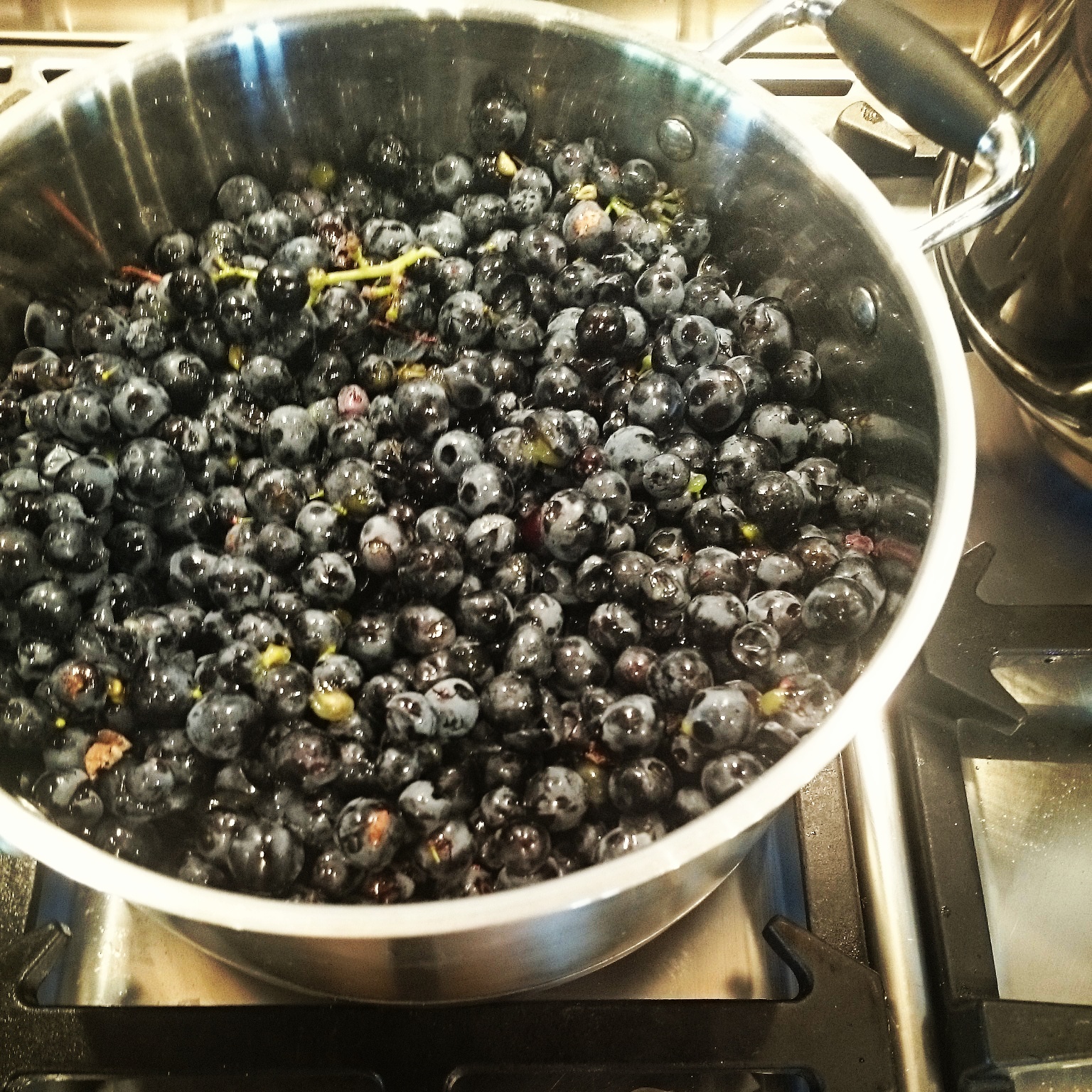
Press grapes to extract as much, juice, colour and flavor as possible and strain to produce clean juice, you will need about 1.5 – 2kg of grapes to yield 500g juice.


Bring grape juice, sugar and spices to a simmer and leave to infuse off of heat for 20 minute and to dissolve sugar.

Strain off spices, stir in sago and bring back to a simmer stirring well to avoid clumping
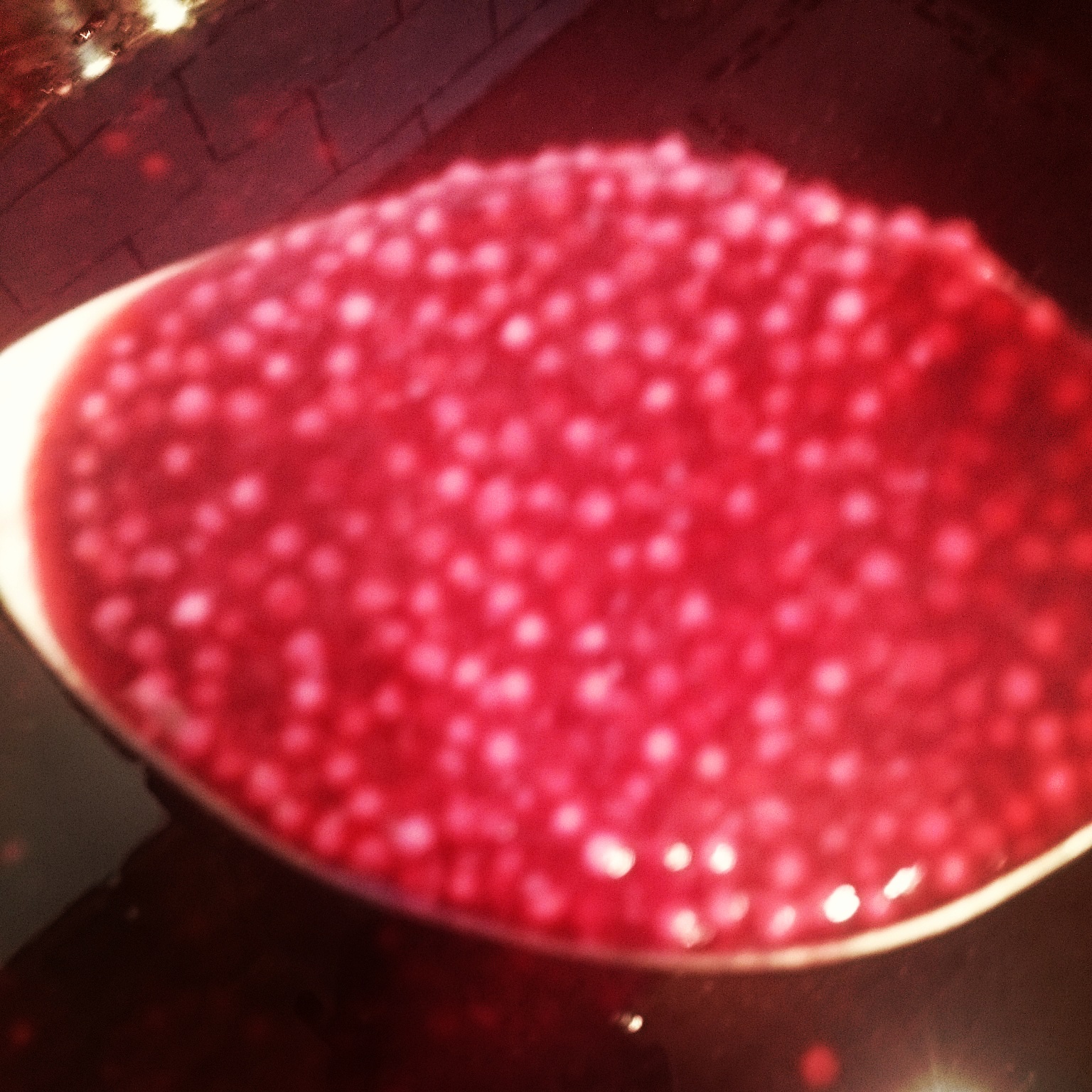
Continue to simmer gently until sago is clear, about 20 minutes then allow to cool slightly and pour into serving dishes.
Chill for a few hours or overnight and enjoy it simply with fresh Jersey cream….. Delicious!
 Food Luddite