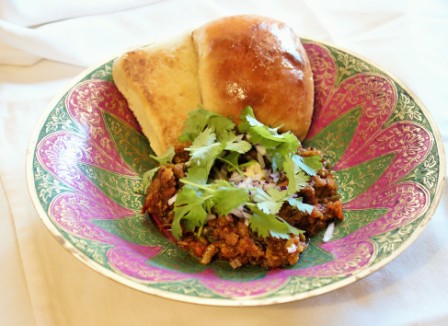
Last week I wrote about the special little bread rolls from Bombay (or more correctly today, Mumbai) called Pav. An indispensable part of the street food called Pav Bhaji (pronounced Pow Bar-jee), This vegetarian dish really is to Mumbaikars what the meat pie is to Australian blue collar workers, quick, relatively cheap and filling.
Hardly a dish for polite society, my initiation to this Marathi treat came while I was spending a week in the kitchen of Colabas Konkan Cafe learning the finer points of this regions native cuisine from some of the Taj Hotels best local chefs. 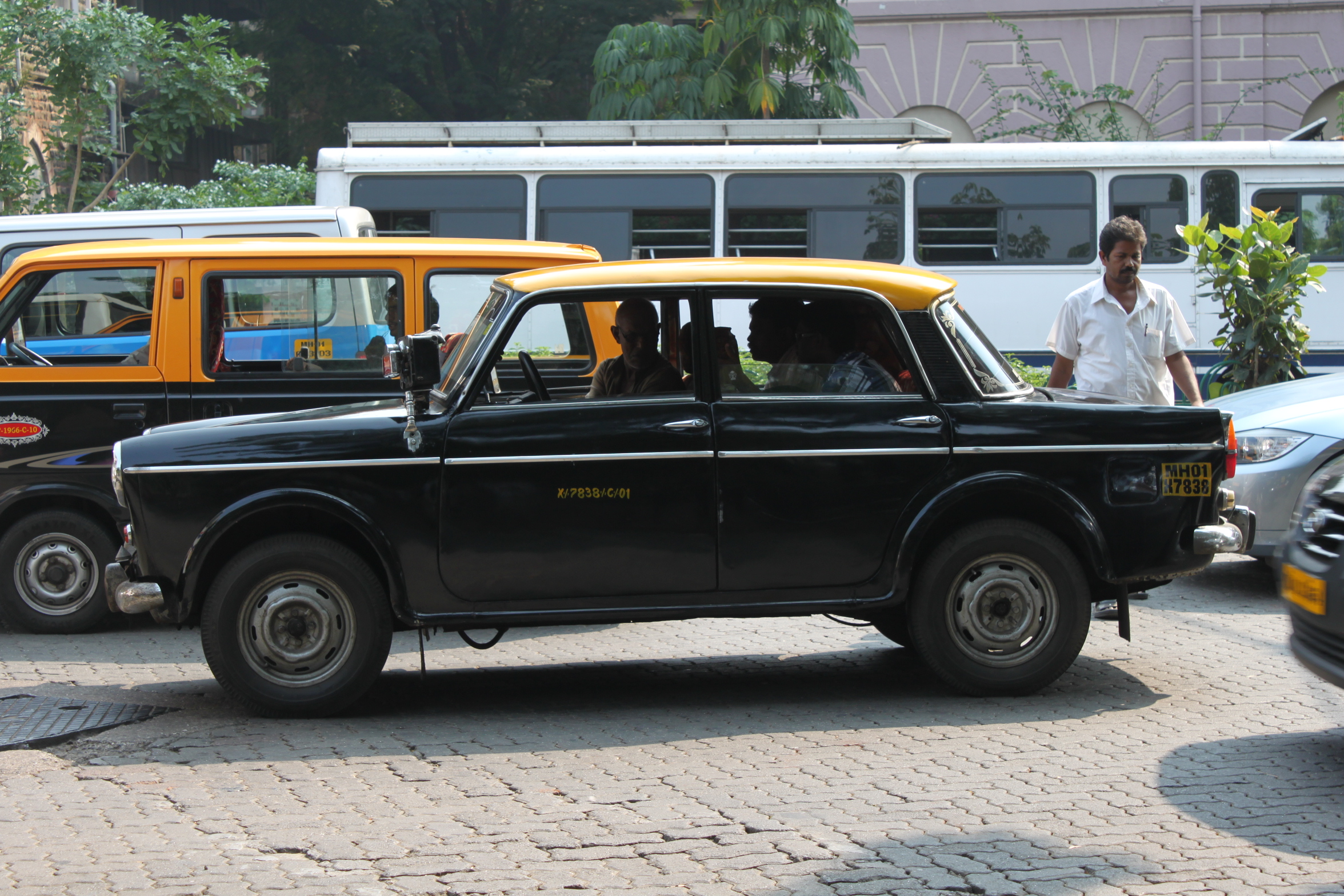
As in every kitchen, they have a pecking order and despite being welcomed as an honored guest I was still the newbie, and like every newcomer to a kitchen brigade one has to pass muster with the team. For me this came in the form of a secret food challenge, specifically lots of chili just for a giggle.
And so, on my second day, “as a treat” one of the senior chefs made a incendiary version of Pav Bhaji (with apparently twice as much chili as would normally be used) but fortunately , over the years I have developed a reasonable chili tolerance, and knowing the game I grinned and bared it, and it paid off.
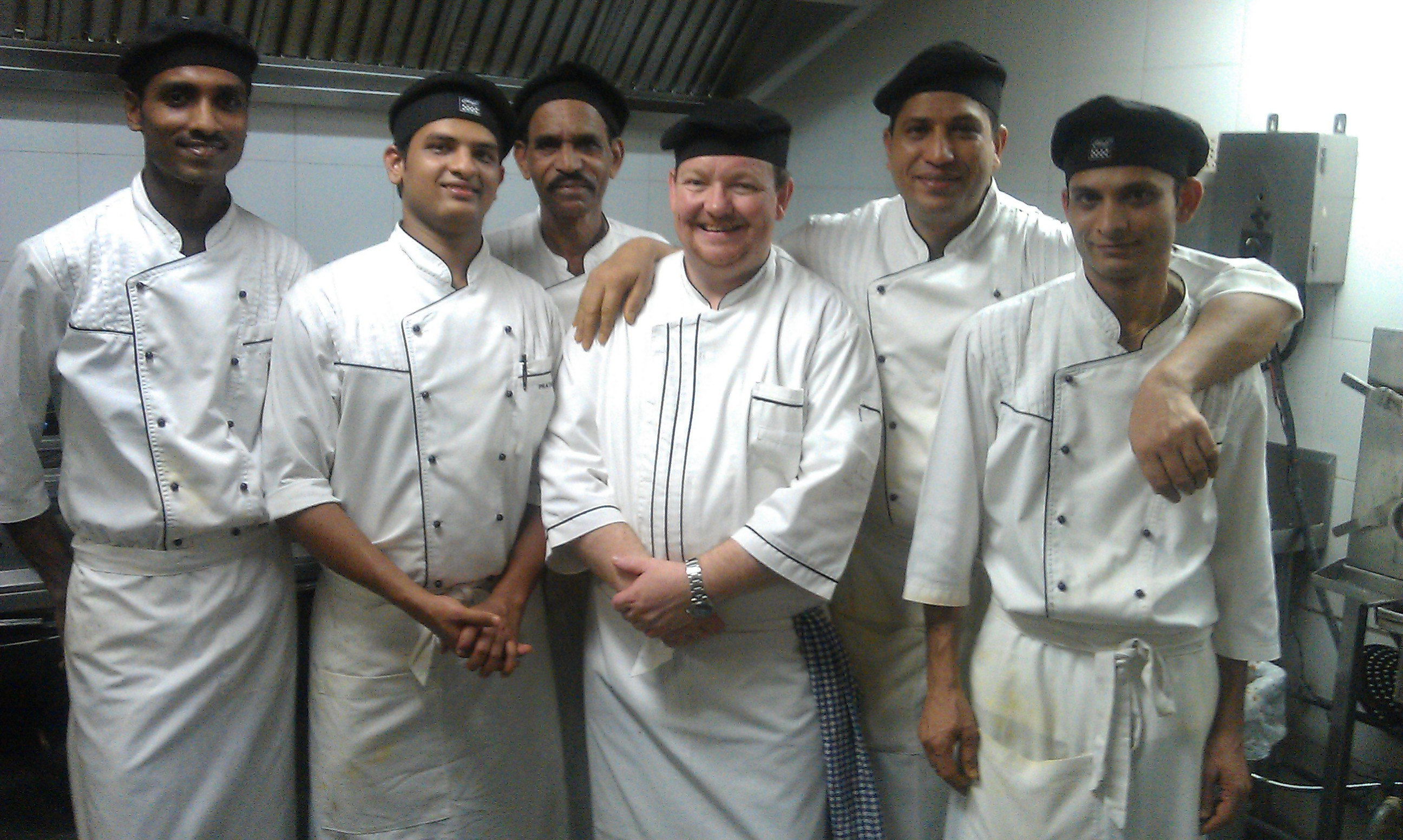
With my initiation complete, working with these guys was an absolute joy and the rest of my week flew. Not only did they take me under their wings and open my eyes to the “East Indian” style of cooking they specialized in, but they also helped school me on India’s myriad cuisines, ensuring I ate at dozens of their favourite, authentic Parsi, Gujerati, Sindi, Goan and Tamil places across greater Bombay. But back the Bhaji part of this dish.
Essentially a “Bhaji” is a simple vegetable dish in the local dialect, but in this guise the Bhaji is a dish of cooked potatoes, mashed and fried in lots of butter, with chopped onions, peppers and tomatoes plus the addition of peas, cauliflower and a spicy red masala.
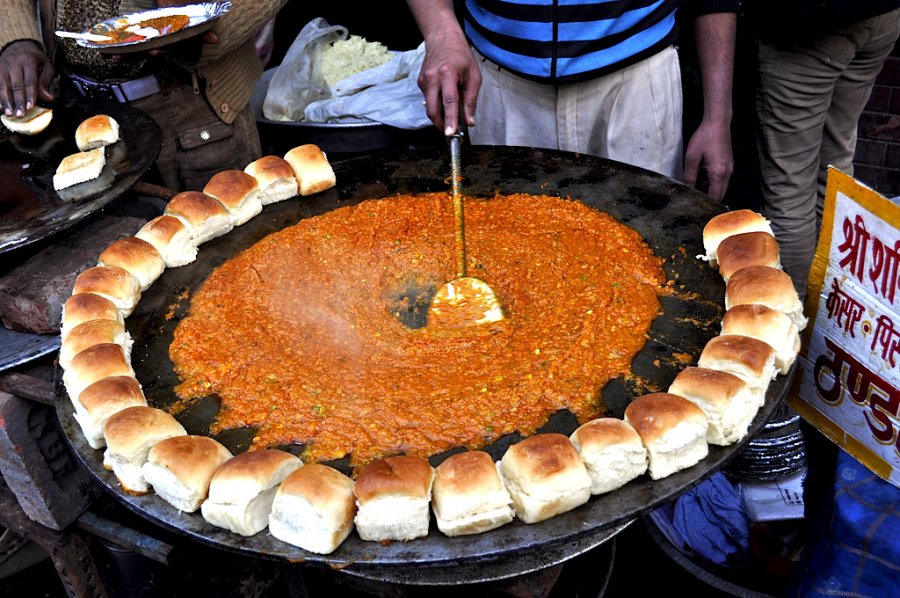
Although first documented in the 1850’s, the name is a kind of Creole. The word Pav clearly derived from “Pão” the Portuguese word for bread or roll and interestingly when they introduced this bread to this region almost 500 years ago they also introduced just about every other ingredient currently used in this version of “Bhaji” (with the exception of dried spices, onions and butter)
Despite these mixed origins, today “Pav Bhaji” it is one of the great original snack foods of India, and like most Indian snacks it is almost always cooked and eaten on the street rather than restaurants. As for serving, the “Pavs” are simply split, buttered and toasted and served to the side of the “Bhaji”, which itself is garnished with chopped onion, coriander and yet another spoonful of fresh butter. Rich, Spicy and Delicious!
Bhaji (for Pav Bhaji)
200g butter
1 teaspoon cumin seeds
1 teaspoon garlic – minced
1 teaspoon ginger-minced
1 green chili – chopped
1 onion – finely chopped
1 tomato – finely chopped
½ green capsicum – finely chopped
1 tablespoon garam masala
1 teaspoon Kashmiri chili powder
1 teaspoon coriander powder
1 teaspoon sweet paprika
1 teaspoon turmeric powder
½ teaspoon amchur (green mango powder)
1 potato
½ cup cauliflower – chopped
½ cup carrot – chopped
½ cup green peas
Salt to taste
To serve:
4 pavs (see last weeks blog)
fresh coriander
chopped red onion
lime wedges- optional Method
Boil all vegetables except onions, tomatoes and capsicum until soft enough to mash – reserve.
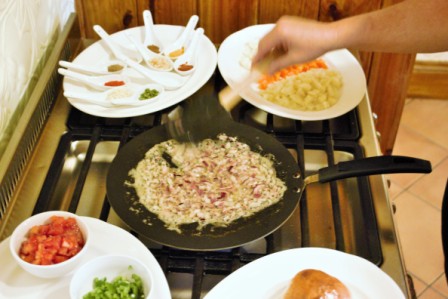
In a large, flat pan or bbq plate melt a third of the butter, add cumin seeds. When they sizzle, add the chopped onions and fry until transparent, add the ginger and garlic and cook until fragrant.
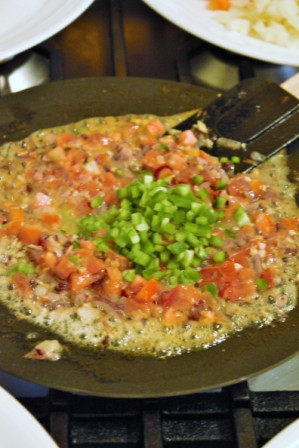
Add green chilies, fry briefly then add the tomatoes and fry until mushy, then and add capsicum and dry ground spices.
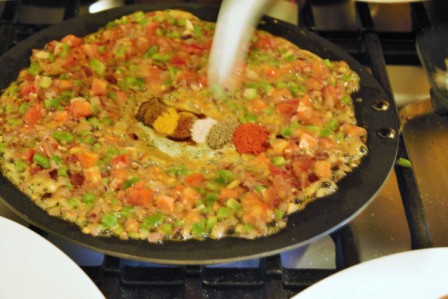
Mix and fry stirring constantly until capsicum softens, then add vegetables, mash and continue frying, stirring well.
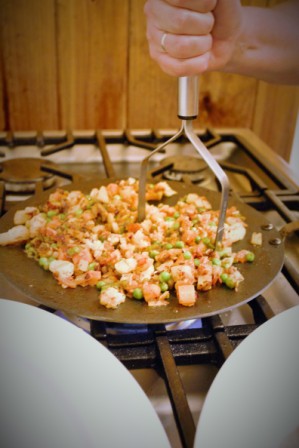
Add another tablespoon of butter and keep frying for 7-8 minutes stirring constantly. Add a little water if the “bhaji” becomes too dry, check for seasoning and add salt to taste. This cooking time is really important to developing an authentic flavor
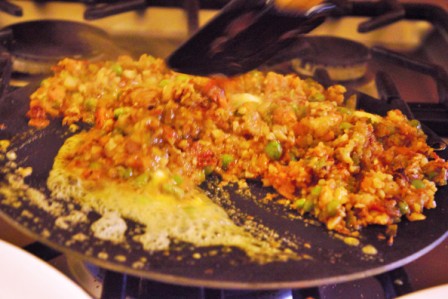
While in this final stage, split pavs and fry /toast in another tablespoon of butter on the edge of the pan allowing the bun to crisp and absorb butter.
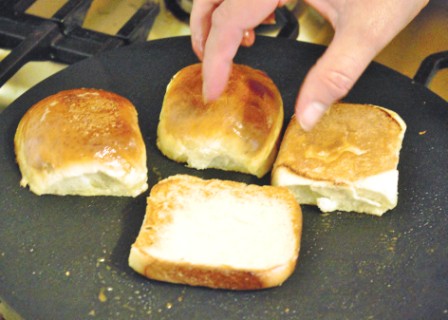
To serve, garnish each portion of bhaji with a teaspoon of butter, some chopped onion, coriander leaves and serve with the toasted “Pavs” (you can also serve some fresh lime wedges to the side if you like)
 Food Luddite